

Research Results
"Much effort and funding is invested every year by many organizations to provide vernacular Scriptures to minority peoples. Are these Scriptures being used? What factors affect their use? We have anecdotes and rumors, but very little real research.
"Over the past few years, a small research team has been developing a questionnaire instrument that can be used widely to gather data on how frequently audiences are exposed to the Scriptures designed for them. The instrument also explores whether the necessary pre-conditions for use of vernacular Scriptures are present: Are people even aware the Scripture products exist? Can they get a copy or listen to it? For print products, are they able to read in the vernacular? Scripture isn’t really available to people if these conditions are not met. The instrument has been tested in Eurasia, Cameroon, and Togo. This paper provides findings from the Togo research."
Download this article from The Bible Translator website. [more...]
"In Australia, frequent Bible reading is the practice of a small group (between 3% and 5%) of young people. This is predominantly a sub-group of those who are involved in Evangelical and Pentecostal churches and youth groups, and those who come from families which encourage the practice."
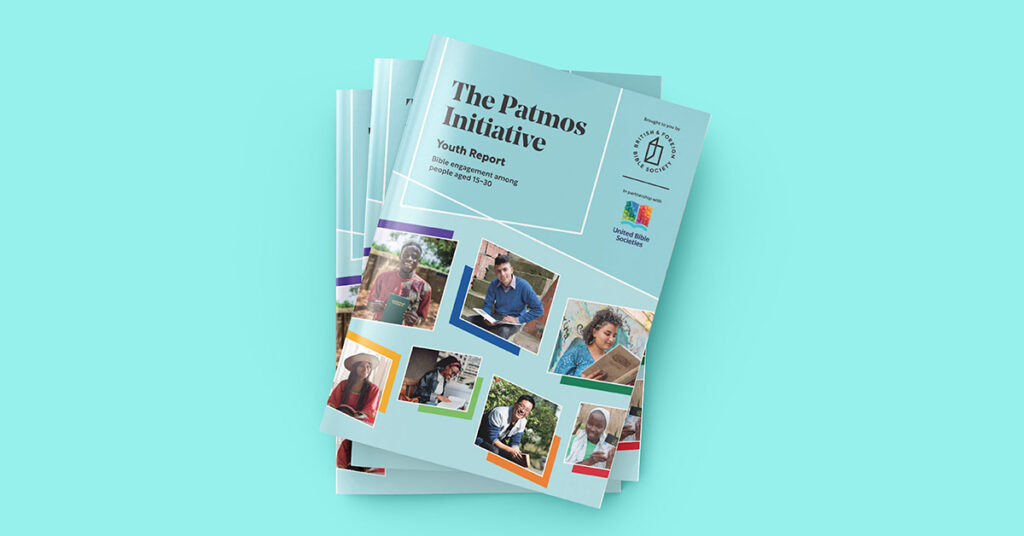
This 53-page report by the Christian Research Association in Australia presents an in depth survey of Bible engagement among 13-24 year olds. It includes statistics on regular Bible reading, attitudes of young people to the content of the Bible, barriers to Bible engagement, major influences on young people, as well as proposing the following recommendations:
- Focus on building youth groups and Bible study groups
- Develop materials for occasional readers and the curious
- Work with families in encouraging Bible engagement
- Explore relevant forms of communication and community for encouraging Bible engagement
Here's an evaluation of the 2011 Biblefresh year in the UK, a nationwide campaign encouraging people to engage with the Bible:
"Biblefresh was a major initiative involving 120 partner organisations, a significant level of resources was invested in it, and its aims were ambitious. Therefore, it was deemed essential that there was a rigorously evaluated. The evaluation was conducted by Theos Think Tank and highly commends the initiative. Biblefresh successfully enabled a wide range of churches, agencies, organisations and colleges to focus on the Bible. Individuals felt that Biblefresh increased their enthusiasm for, and confidence in, the Bible. The report also highlights lessons that can be learnt for the future and reminds us that when it comes to engaging people with the Bible, there is still a lot more work to be done." (EA, 2012)
On the Evangelical Alliance website you'll find a 43-page evaluation report together with videos of partners talking about what they learned from the year. [more...]
This survey of British people's knowledge and use of the Bible was carried out in streets and shopping centres across England and Wales.
Here are some of the findings:
- 75% said that they owned a Bible, 46% of these owned a traditional Bible, 18% a modern version and 36% said that they owned both a modern and a traditional version.
- 18% said that they had read the Bible in the last week. 31% said the Bible was significant in their lives now. 47% said the Bible was never significant to them.
- Even if the information about Bible reading habits is a little gloomy, knowledge about core details of the Christian faith and some of the central Biblical figures are better.
- About 80% of those surveyed had some knowledge about the crucifixion and resurrection of Jesus. However, knowledge about some essential stories is being lost, especially Old Testament stories.
The survey briefing concludes: "...the masses have been persuaded that the Bible cannot be understood without someone else coming to interpret it or indeed make it more simple – to broker the Bible. Once again, we are offered the stark reality of a people who have been robbed of their Bible, robbed of the words of life by elitism and clericalism. For Biblical Literacy to make an impact of some kind, we need to re-engage the masses with their Bible, to return it to the people: we need a New Reformation!" [more...]
Abstract:
"The need for the translation of the Scriptures into the vernacular to enable people read the Bible in their mother-tongues started in the third century BC in the ancient city of Alexandria in Egypt. Since the first mother-tongue translation – from Hebrew to Greek – many vernacular translations have been done. As of 2009, Bible Agencies in Ghana have translated the full Bible into 13 and the New Testament into 20 languages. The question is, are the mother-tongue translations of the Bible being used?
"The study which was conducted in Kumasi, Ghana, in 67 congregations of the Mainline, Ghana Pentecostal, African Indigenous and Charismatic Churches, and some New Religious Movements, in October-November 2009 reveals that 55.5% of the respondents had the Bible in eight mother-tongues in the Kumasi Metropolis; people from ages 41-60, constituting 77.2% of the respondents read the mother-tongue Bibles most; only 12.8% young people read the mother-tongue Bibles; 34.1% of the respondents read the mother-tongue Bibles daily; 32.1% at least thrice a week; and 33.8% once a week, perhaps only on Sundays when they carry the Bibles to their respective churches. Even though this research was limited to Kumasi, it serves as an eye opener as to whether Christians are using the Bible translated into the various Ghanaian languages. This research is significant in that it is the first of its kind in Ghana, and others can build on it." [more...]
Published as part of Uncover the Word, "this April 2011 research contains findings from a nationwide study commissioned by American Bible Society and conducted by Barna Research. The study documents responses taken from U.S. adults 18 years of age and older, and categorizes them to highlight essentially four different groups and their feelings with regard to the authority and relevance of the Bible: 1) Engaged, 2) Friendly – Moderate, 3) Friendly – Light, and 4) Antagonistic."
"Lack of time" was noted as a primary deterrent for every single group. Sometimes this response can be more symptomatic than causal; humans find time for things that are high priorities. Still, people can believe in the Bible and want to read more, but don't have the personal bandwidth.
The survey hones in on the perceptions, misperceptions, Biblical confidence and format preference of each group. There is a helpful conclusion section, with recommendations for encouraging Scripture Engagement among people in each of the four categories. [more...]
The State of the Bible 2013 report contains the findings from a nationwide study commissioned by American Bible Society and conducted by Barna Research.
From the report:
"Americans overwhelming (77%) believe morals and values are declining in the U.S. The most-cited cause for the decline is a lack of Bible reading. As in previous years, the survey found that the Bible remains a highly valued, influential force in America. But beliefs about the Bible and its role in society are becoming increasingly polarized—particularly when the data is examined by age group.
"The research also uncovered a significant disconnect in belief versus behavior. While 66% of those surveyed agreed that the Bible contains everything a person needs to know to live a meaningful life, 58% say they don’t personally want wisdom and advice from the Bible and about the same amount (57%) read it fewer than five times per year.
Key Findings:
- 1 in 6 people reported buying a copy of the Bible in the last year
- 80% of Americans identify the Bible as sacred
- Americans have plenty of copies at their fingertips—with an average of 4.4 Bibles per household
- 56% of adults believe the Bible should have a greater role in U.S. society
- But actual Bible reading and perceptions about the Bible have become increasingly polarized, with 6 million new Bible Antagonists in the last year alone
- More than half (57%) of those ages 18-28 report reading the Bible less than three times a year or never."
Data, analysis and infographics are available for download from the American Bible Society website. There are also links to the 2011 and 2012 reports. [more...]
Congregation members also feel that there is scope for improving the role the Bible plays in Church services. Many feel their understanding of the passages read by preachers during sermons would increase if preachers were better at contextualising the material and providing them with examples of how it is relevant to their lives and how they can apply biblical principles to the problems they face.
This report contains the views of church congregations and pulpits across England and Wales. Commissioned by Bible Society, the report reflects the comments of more than 3,000 church leaders and members.
Topics researched include: the Bible in terms of society and churches, the Bible and spiritual growth, Bible resources, and Bible literacy and application. [more...]
Taylor University (a Christian university in Indiana, USA) has created a Center for Scripture Engagement.
The reasons given are: (1) because Scripture Engagement is on the cutting edge of evangelism, (2) because engaging with Scripture is the catalyst for transformational discipleship and (3) because a new vision of the power of Scripture is urgently needed.
The Center defines "Scripture engagement" as follows:
Scripture engagement is interaction with the biblical text in a way that provides sufficient opportunity for the text to speak for itself by the power of the Holy Spirit, enabling readers and listeners to hear the voice of God and discover for themselves the unique claim Jesus Christ is making upon them.
On the website, you can view findings from The Christian Identity & Scripture Engagement research project, where 592 university students were surveyed in 2011 on aspects of their Christian lives, including the spiritual disciplines and the role of the Bible. [more...]
"...the creative engagement between respondents and text results from respondents discovering that the psalms resonate with their idealism and basic human needs in ways that facilitate their ongoing spiritual quest for meaning and enlightenment, as well as providing an opportunity to confront God with complaints and dilemmas."
This study is the account of an empirical research programme in practical theology exploring the potential of the Book of Psalms to facilitate the spiritual journey of a sample of University of Edinburgh students aged between twenty and thirty who are on or beyond the fringes of the churches. Drawing upon some insights of the Bible Society movement regarding ‘scripture engagement,’ and in the wider context of increasing interest in spirituality and decreasing confidence in the churches among many westernised young adults, the project seeks to answer two research questions. [more...]