

Tools and Methods
It has been amazing to see this calendar posted in the main markets of Northern Cameroon... We have found this tool an excellent method to get the Word of God out to the general populace.
A tool that has encouraged scripture engagement in Northern Cameroon has been a calendar that has both Arabic (Ajami) and Roman script dates. For each month there are culturally appropriate drawings and Bible verses written in the Ajami script. [more...]
"It has been proved over and over again that people do not learn by sitting and listening to long lectures! The more the participants are involved in the learning process, the more they will remember. As much as possible, help the participants to put into practice what they are learning during the workshop. Use of drama, role play, music, small group discussions are all helpful ways of getting the message across."
Drawing on years of experience in running workshops around the world, Margaret Hill cites some of the problems encountered, for example: lack of mentoring and follow-up, wrong choice of participants, lack of political/social support for the participants, people sometimes like coming on workshops in order to get certificates without any expectation of using the new knowledge, lack of local funding.
After describing several possible solutions to these problems, Margaret concludes that "workshops and courses can indeed be very useful, but they can also be a waste of time and money. Planning is needed to make the best possible use of the time when people come together". [more...]
When creating a Scripture use plan how do you get a grip on the pertinent conditions to be able to set goals and create a plan?
The Welser Scale is an assessment tool used to facilitate goal setting and Scripture use planning. The intuitive scoring process is described and a blank template and an example are included.
The categories are based on Wayne Dye's Eight Conditions for Scripture Engagement. [more...]
"We know that just because someone has a printed Bible doesn’t mean they will use it. After the novelty has worn off, how can we encourage people to go on listening and engaging with God’s Word with their audio player?"
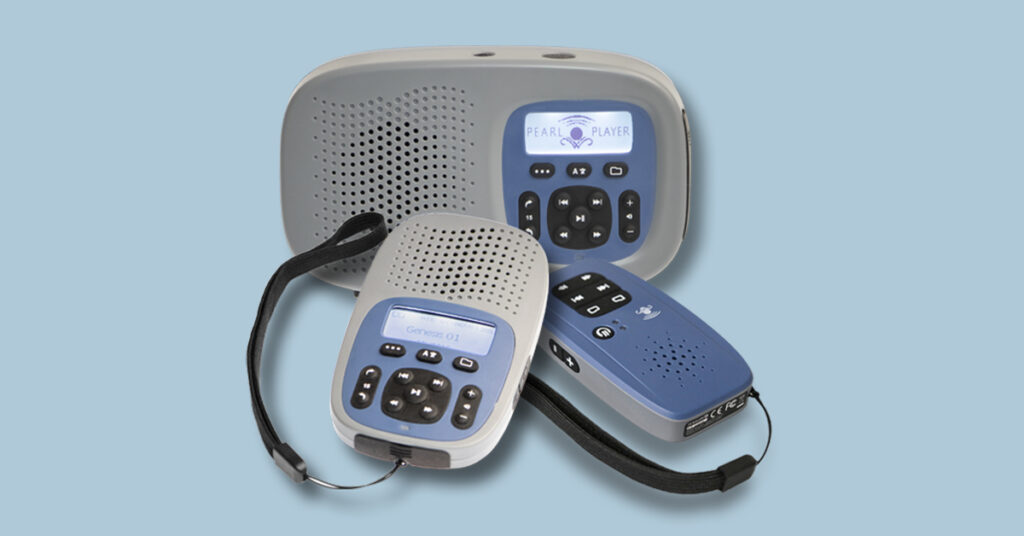
In recent years we’ve seen the launch of a number of multi-purpose digital audio players, designed for contexts without easy access to electricity: such as the MegaVoice Ambassador, the Saber, the Papyrus and the Audibible. They can contain hours of audio Scripture, songs, teaching, Bible stories, or whatever audio content you choose.
Suppose you had 10 of them, or 100, or 1,000? What would you do with them? Not only would you need to decide what to put on them, but you would also need to think about how people will get hold of them and put them to use.
This brief article describes 9 ideas for putting audio players to use, including listening groups, audio libraries, tools for pastors and evangelists, new communities and translation testing. [more...]
"When it comes to audio and video products, the mobile phone can be an effective method of getting the Scriptures to people... who then pass them on to other people... who then pass them on to other people..."
This article discusses some of the implications of mobile phone technology for encouraging the sharing of audio/video Scripture products. Questions raised include:
- Who is your target audience?
- What are the best Scripture products for the phone?
- How will people get their first copy of the media files which they can then share with their friends?
- Are there any copyright issues involved?
- How could mobile phone technology become an obstacle to people engaging seriously with God’s Word?
- What are the most positive aspects of using mobile phones for Scripture distribution?
"Praise God for this event where so many people from what Brazil calls the three waves of missions worked together. As one person reported, he heard expatriates, Portuguese MT Brazilians and indigenous people calling the event 'their forum'."
This is a report from the first Brazil Forum for the Use of the Scriptures in Indigenous Languages, which brought together 200 people, representing 59 ethnic groups and 32 organizations.
There were plenary sessions in the morning with group discussions following. In the afternoon there were workshops on topics such as Scripture Memorization, Use of Indigenous Scriptures in the family and eight other diverse topics. The evenings were for enjoying different ethnic music, hearing testimonies, and in general, having good fellowship. [more...]
Remember that interventions with low external inputs and high local ownership have a good chance at promoting lasting change.
This article starts with a brief history of change in Africa and Europe, looking at the attitudes to and reasons for change, personal motivation for change and a Christian perspective. It continues by examining the three different levels at which change takes place – worldview/values/morality, informal cultural customs and technical. Change also affects power relationships, so the need to discuss potential changes with all the players and avoid loss of face for each is vital, as well as being aware of people’s motivation, peer pressure and the need to take things slowly. [more...]
What kinds of resources and activities would be good for promoting Scripture Engagement in language communities around the world? This checklist was put together at a seminar in Nairobi, Kenya, in August 2011.
I hope it will be useful as you work on planning and strategy issues in Scripture Engagement. Most communities would not expect to have all the items listed here but it is likely that they should be working on some in each category, with the aim of seeing people engage with God’s Word in their local language and culture.
The checklist includes 19 categories of activities and resources. [more...]
The magazine combines articles by experienced Christian publishers with the best that new technologies have to offer. They seek to provide news, publisher development training, and inspiration for all who are committed to sharing God’s Word to transform their nations.
Cook Partners magazine replaced InterLit in 2007.
"Tensions naturally are high in a crisis, but when a person becomes a follower of Christ, some of those practices clash with Scripture, creating new and sometimes intense tensions."
This workshop focused on equipping believers to resist those pressures toward practices that conflict with their allegiance to God, and to overcome the internal tensions created so they might respond in ways that are scripturally grounded while still being culturally meaningful. [more...]