

Kinds of Media
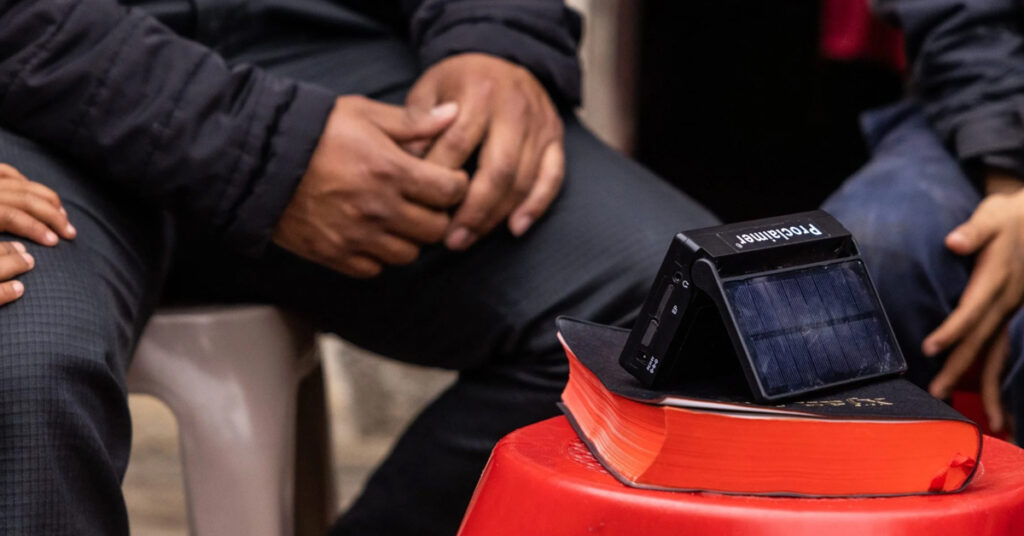
People need to engage with God’s Word in order to have their lives changed. What if they could engage with without picking up a Bible? What if it could be delivered in a new way? One that is always with them? 411God delivers God’s Word to users’ cell phones in either SMS, voice or e-mail format at a convenient time they choose each day. It helps engage people who may not otherwise take the time to read from the Bible regularly. [more...]
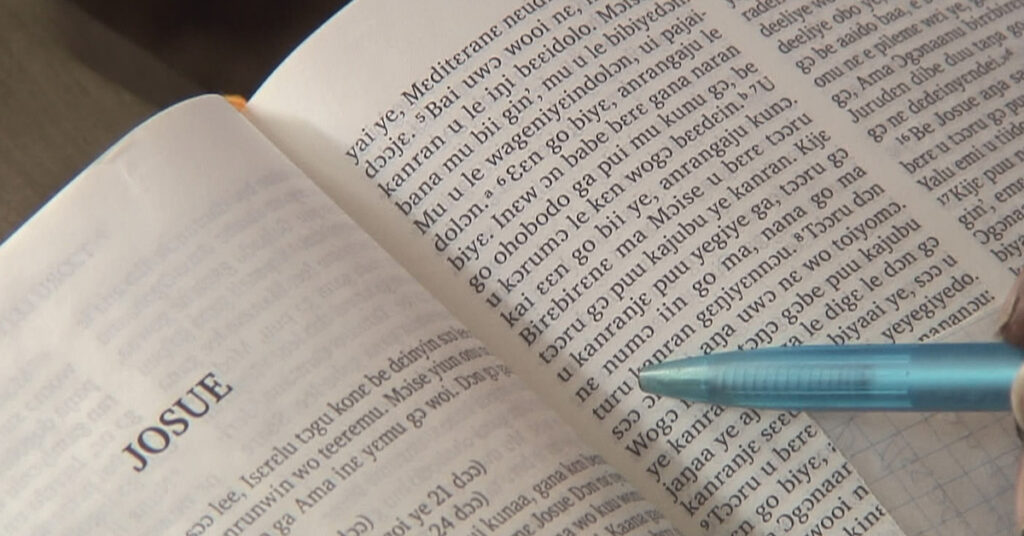
One of the first questions translation teams ask when determining program strategy is: Are there people who are literate or semi-literate in the national language? If so, how can we get them reading in their own language?
In Columbia, where Spanish is spoken widely, very few Desano people had made the transition to reading in their own mother tongue. Leah Walter helped to develop a transition primer to be distributed along with the New Testament. The article includes a step-by-step description of how she and the team developed this primer to teach themselves how to read their mother tongue. It was suitable for both literates and semi-literates. Sample pages from the primers are included. They include lots of pictures, which aid the reader. [more...]
The issue of non-readers is an issue for all countries, as we see reading declining even in countries with high literacy rates. It has been estimated that in some African countries printed scripture only reaches around ten percent of the population. The challenge is therefore to develop translations that are relevant to the media, productions that are appropriate, and distribution systems for scripture that reach the non-reading population.
Viggo Søgaard argues for the kinds of Bible translation needed for non-reading populations, conforming to "the rules and requirements of spoken rather than written language". He describes the differences between oral and written communication and highlights some of the areas translators need to pay attention to when producing translations for audio media (emphasis, direct speech, intonation, context information). [more...]
"Make a big effort to understand the full meaning of the text... Try to put yourself in the shoes of your character. Think of their character, their temperament, their behaviour. What do they like? What don’t they like?"
This is a list of advice for narrators and actors working on audio products for promoting Scripture Engagement. These could be dramatised Bible portions or Scripture relevance dramas.
The advice comes from a drama team with many years of experience in producing radio programmes in West Africa. [more...]
Africa by Radio is a body of Christian broadcasters unified by an agreed strategy, supporting God’s plan for Africa. We are committed to seeing that every man, woman and child in Africa is provided the opportunity to turn on a radio and hear the Gospel of Jesus Christ in a way and language they can understand, so they can become responsible members of His Church.
It is useful for those involved in Scripture Engagement in Africa to maintain links with Africa By Radio, to encourage a healthly partnership with radio stations around the contintent in broadcasting Scripture.
"Good News" is an evangelistic Bible teaching audio-visual. It presents a quick Bible overview from Creation to Christ's resurrection in 20 pictures, with a further 20 pictures of basic teaching on the Christian Life.
The "Look, Listen and Live" series of 8 audio-visuals gives studies of Old Testament characters, the life of Jesus, and the young Church. There are 24 pictures in each book.
"The Living Christ" series of Bible pictures illustrates the Life of Christ, from Creation to His second coming. [more...]
Bible Storying is the intentional and uninterrupted sharing of God's Word primarily as stories. These stories are usually supplemented with culturally appropriate learning exercises that are listener sensitive. The stories may be told as part of a strategy of telling many stories leading to an invitation to believe, or may be only a few stories during an evangelistic encounter or a ministry opportunity.
This book is a manual for those wanting to get into Bible storying, including chapters on topics like: rationale for Bible storying, considering worldview, choosing Bible stories, crafting Bible stories for telling, pre-story dialog time, post-story dialog time.
The author describes the many options for presenting a Bible story and describes a model storying session. [more...]
The listener controls the radio. He can turn it on or off. That is why you not only need to acquire an audience, but also know how to maintain one. Radio is one-time communication. The message needs to be clear, simple and precise for a one-time hearing. Don’t be afraid to repeat the information in different ways.
There are increasing opportunities for Scripture to be broadcast on local radio stations. But how can we produce interesting programs that people will want to listen to and hence engage with God's Word?
This manual was developed to explain how to plan, present and produce radio programs.
The material presented here is basic and fundamental. It is designed to train indigenous speakers. It will teach them how to reach their people through the medium of radio. An experienced media trainer should present the material to them. Anything new can then be fully explained to the student. [more...]
A set of CDs containing illustrations for use in published materials, shell books, filmstrips, film, flipcharts, etc. for the purpose of furthering the cause of literacy and to encourage the use of the translated Scriptures.
This video from Theovision, Ghana, tells of how they set up a Bible listening programme for school children and the effects they have seen coming from it.
The children are split into three age groups. After prayers, the youngest listen to Bible audio cassettes in Akan, the local language, while the older groups listen in English. This is then followed by a time when the pupils can ask questions about what they have heard. Finally, at the end of the hour, there is prayer focussing on what has been learned. [more...]