

Scripture Engagement Essentials
Of this I am convinced: This side of heaven there is nothing more wonderful we could ever hold in our hands or engage with our minds than God’s Word as given to us in the Bible.
The author describes 25 ways of engaging with Scripture:
Survey the Word, Listen to the Word, Read the Word Silently, Read the Word Aloud (Privately), Read the Word Publicly, Discuss the Word, Hand-copy the Word, Study the Word, Cross-reference the Word, Stress the Word, Highlight the Word, Read the Word Responsively, Paraphrase the Word, Dramatize the Word, Sketch the Word, Read the Word Interpretively, Memorize the Word, Recite the Word Interpretively, Personalize the Word, Sing the Word, Hum the Word, Display the Word, Share the Word, Teach (or Preach) the Word, Do the Word! [more...]
"Much effort and funding is invested every year by many organizations to provide vernacular Scriptures to minority peoples. Are these Scriptures being used? What factors affect their use? We have anecdotes and rumors, but very little real research.
"Over the past few years, a small research team has been developing a questionnaire instrument that can be used widely to gather data on how frequently audiences are exposed to the Scriptures designed for them. The instrument also explores whether the necessary pre-conditions for use of vernacular Scriptures are present: Are people even aware the Scripture products exist? Can they get a copy or listen to it? For print products, are they able to read in the vernacular? Scripture isn’t really available to people if these conditions are not met. The instrument has been tested in Eurasia, Cameroon, and Togo. This paper provides findings from the Togo research."
Download this article from The Bible Translator website. [more...]
"In Australia, frequent Bible reading is the practice of a small group (between 3% and 5%) of young people. This is predominantly a sub-group of those who are involved in Evangelical and Pentecostal churches and youth groups, and those who come from families which encourage the practice."
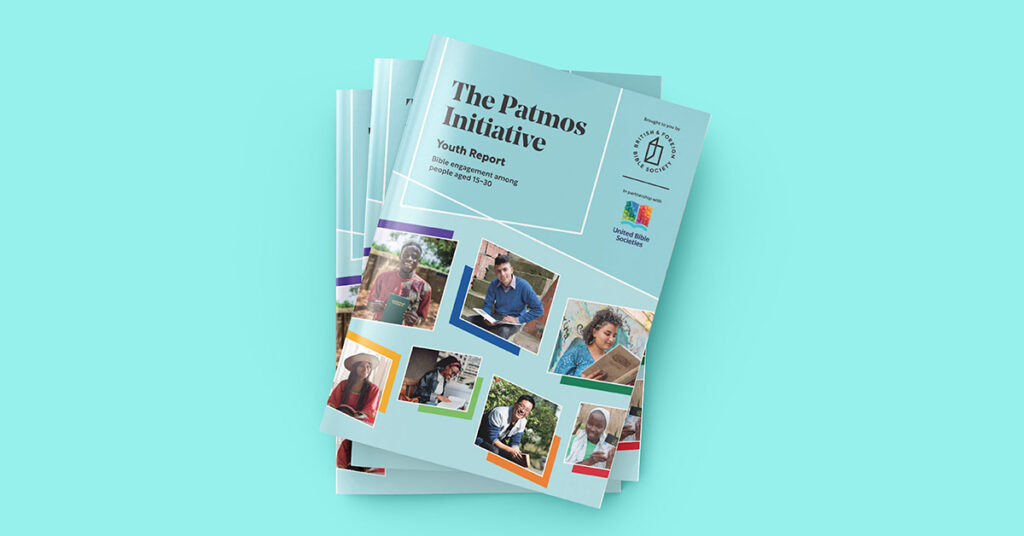
This 53-page report by the Christian Research Association in Australia presents an in depth survey of Bible engagement among 13-24 year olds. It includes statistics on regular Bible reading, attitudes of young people to the content of the Bible, barriers to Bible engagement, major influences on young people, as well as proposing the following recommendations:
- Focus on building youth groups and Bible study groups
- Develop materials for occasional readers and the curious
- Work with families in encouraging Bible engagement
- Explore relevant forms of communication and community for encouraging Bible engagement
"Are you stuck along the way of engaging with the Bible? If so, where? Why? If you're involved in ministry, are the people you work with stuck? If so, where? Why?"
Scripture Engagement can be seen as a process: Bible Availability, Bible Awareness, Bible Use, Bible Understanding, Bible Engagement. The process can be arrested at any step along the way.
This article presents some of the key challenges for ongoing discussion. Give your feedback in the comments here or in the Lausanne Global Conversation. [more...]
"I see a generalized pattern of other missionary translators, neglecting the use and distribution of translations done by their colleagues after their colleagues are gone. This appears to call into question that the use and impact of the translations of others important to them, especially when one compares it to what they do pay a lot of attention to..."The author of the Bible Translator Foibles blog asks searching questions for missionary Bible translators, especially about their desire to see the Scriptures available and put to use.
"I asked the leadership about this New Testament. Was it being used? Was it having an impact? Was it still available and for sale in the part of the country where the language was spoken?For anyone involved in Bible translation in a cross-cultural context, this blog offers plenty of food for thought. [more...]
The answer to all of these questions was “We don’t know”. That answer was surprising enough, but I was really shocked that the questions did not seem to evoke any sense that not knowing was a problem. The questions did not create any desire to find out. It appeared to me that it was okay with the missionary translators if the completed New Testament in that language was no longer available to the people for whom it was translated."
BibleFresh is a joint initiative which aims to encourage and inspire churches across the UK to make the most of the year 2011, empowering Christians to a deeper level of engagement with the Bible. The initiative brings together nearly a hundred agencies to raise the level of biblical literacy across the UK, through the following four tracks:
- Bible Reading
- Bible Training
- Bible Translation
- Bible Experiences
The BibleFresh website now has a leaders' guide to download and will host other resources as 2011 approaches. [more...]
"So my challenge to Christian leaders who are genuinely concerned about the decline in Bible reading is this: stop telling us we’re biblical ignoramuses, and start encouraging us to meet God in his Word. Because ultimately, true Bible engagement is real God engagement. And that’s our deepest need."
Whitney Kuniholm (Scripture Union) urges us to move beyond mourning Bible illiteracy - the increasing lack of Bible knowledge in our societies. Rather, he encourages us to call people to Bible engagement - meeting God in his Word and responding in obedience. [more...]
"Praise God for this event where so many people from what Brazil calls the three waves of missions worked together. As one person reported, he heard expatriates, Portuguese MT Brazilians and indigenous people calling the event 'their forum'."
This is a report from the first Brazil Forum for the Use of the Scriptures in Indigenous Languages, which brought together 200 people, representing 59 ethnic groups and 32 organizations.
There were plenary sessions in the morning with group discussions following. In the afternoon there were workshops on topics such as Scripture Memorization, Use of Indigenous Scriptures in the family and eight other diverse topics. The evenings were for enjoying different ethnic music, hearing testimonies, and in general, having good fellowship. [more...]
It is important for all of the local churches to be increasingly implicated in the translation project for the following reasons: It ensures that the translated Scriptures will be used after the New Testament’s publication, so that there will be a greater impact of the Holy Scriptures in the life of the Church.
The Cameroon Association for Bible Translation and Literacy (CABTAL) has a Church Relations department which seeks to involve local churches in the translation task from the very start of the project. It is their belief that the more the churches are involved in supporting the work, the more the published Scriptures will be used.
The August 2006 edition of CABTAL's "Scriptures Alive" magazine focusses on this part of their ministry, describing the many ways in which they are sharing the vision for Bible translation and Scripture Engagement: banquets, Sunday morning presentations in churches, speaking at general assemblies, attending New Testament dedications, visiting a Bible translation project, seminars at a Bible Schools and seminaries... [more...]
Only God's inspired Word changes people's lives. That's a fact. It's also a fact that fewer people than ever know that the answers to their problems are contained in that dusty book on their shelves.
The Center for Bible Engagement exists to encourage Bible reading and Bible study; to not only equip the reader with biblical answers to life's questions, but to foster a biblical lifestyle as well. [more...]